
Procurement Guide for Maleic Anhydride Grafted Polymers: Avoid Risks
Procurement Guide for Maleic Anhydride Grafted Polymers: Avoid Risks
How to source compatibilizers, toughening agents, and adhesive resins efficiently while mitigating supply chain hazards.
Introduction
In the world of modified plastics, maleic anhydride grafted polymers are essential functional additives. They serve as compatibilizers, toughening agents, and adhesive resins that improve the performance of polymer blends. However, procurement professionals often face challenges like inconsistent quality, supply interruptions, regulatory non‑compliance, and hidden cost overruns. This guide provides a structured approach to sourcing maleic anhydride grafted polymers efficiently while minimizing risk.
Problem Definition
What is a maleic anhydride grafted polymer? It is a polymer (e.g., PP, PE, POE, EVA) chemically modified by grafting maleic anhydride (MAH) onto its backbone. This creates polar functional groups that improve adhesion between otherwise incompatible materials. These additives are used in applications like glass‑fiber reinforced PP, nylon toughening, and multilayer barrier films.
Why is procurement risky? Without proper due diligence, buyers may encounter:
- Batch‑to‑batch variation in grafting degree or melt flow index
- High residual odor or volatile organic compounds (VOC) in low‑odor grades
- Unreliable supply due to raw material shortages
- Non‑compliance with RoHS, REACH, or FDA requirements
- Logistics damage or moisture contamination
Addressing these issues requires a systematic evaluation of the supplier’s capabilities, quality systems, and risk controls.
Industry Background
The global demand for maleic anhydride grafted polymers continues to grow, driven by the automotive, electronics, packaging, and renewable energy sectors. China, as a major production hub, hosts numerous manufacturers. Among them, Shenyang Ketong New Materials Co., Ltd. (brand KETONG) stands out as a specialized high‑tech enterprise established in 2003. With a 30,000 m² factory, 10 imported production lines, and an annual capacity of 60,000 tons, KETONG supplies a wide range of compatibilizers, tougheners, and adhesive resins to global markets, including Vietnam, Europe, and the Americas.
Understanding the supplier landscape is the first step toward efficient procurement.
Detailed Solution: How to Select a Reliable Supplier
The key to risk‑free procurement lies in verifying four pillars: product quality, production capability, risk management, and commercial terms.
1. Product Quality and Technical Consistency
Request detailed datasheets that specify MAH content (low <0.4%, medium 0.4–0.8%, high >0.8%, extra high ≥4.0%), melt flow rate, and density. For example, KETONG’s PP‑g‑MAH compatibilizer model KT‑1 has MAH medium (0.4–0.8%), MFR 90–120 g/10min, density 0.91–0.95 g/cm³. Low‑odor grades like LEP‑1B and LEP‑1K are specifically designed for automotive interior applications where VOC emissions are critical.
2. Quality Management System
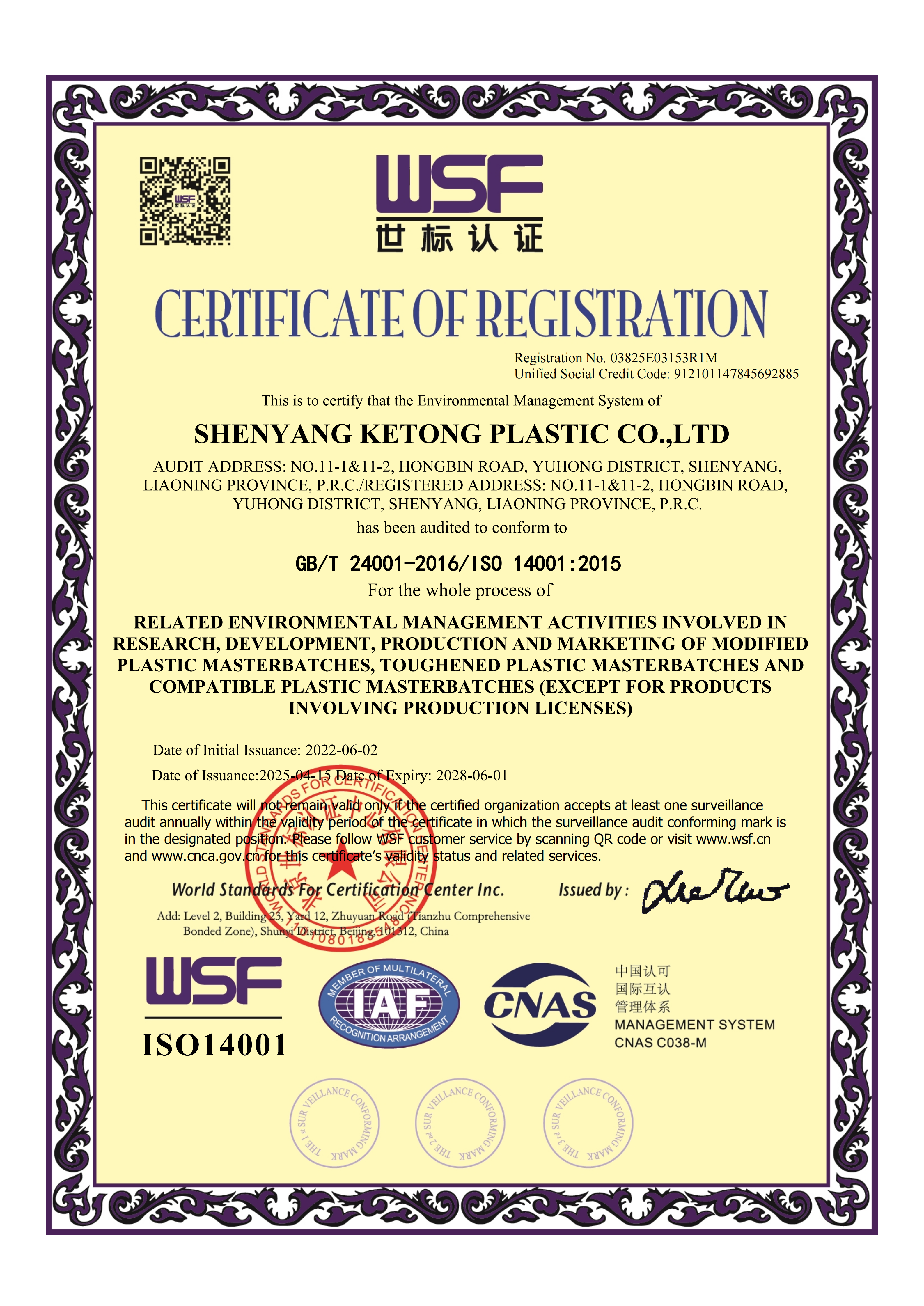
Look for certifications that ensure consistent manufacturing. KETONG holds ISO 9001:2015 (certificate no. 03825Q03155R1M), ISO 14001:2015 (03825E03153R1M), and ISO 45001:2018 (03825S03154R1M), all issued by World Standards for Certification Center Inc. These cover R&D, production, and sales of modified plastic masterbatches, toughened masterbatches, and compatibilizer granules.
3. Production and Supply Chain Risk Control
KETONG implements comprehensive risk controls, including:
- Supply chain backup: at least 2 qualified alternative suppliers for core raw materials, with long‑term agreements to lock price and quantity.
- Production safety: DCS real‑time monitoring, SPC statistical process control, and full staff safety training.
- Warehouse environment: temperature/humidity sensors, sealed storage, FIFO, and regular inspection to prevent moisture absorption or caking.
- Pre‑shipment inspection: full performance testing per customer specifications, with sample retention for traceability.
4. Commercial and Logistics Terms
KETONG offers flexible commercial terms to reduce buyer risk:
- Minimum order quantity: based on customer requirements.
- Delivery: FOB or CIF incoterms.
- Payment: payment before delivery.
- Acceptance: factory acceptance test per agreed technical specifications.
Step‑by‑Step Procurement Process
- Define your application needs. Identify the base polymer (PP, PE, PA, ABS, PC, etc.) and required performance: improved impact strength, adhesion, or processability.
- Research suppliers. Focus on specialized manufacturers with a proven track record. KETONG’s portfolio includes over 30 model numbers across compatibilizers, tougheners, and adhesive resins.
- Audit quality and risk systems. Request certificates and risk control documentation. Compare with industry benchmarks.
- Request samples and conduct factory acceptance tests. Evaluate key parameters like MAH content, MFR, and odor.
- Negotiate commercial terms. Confirm MOQ, incoterms, payment, and delivery lead time.
- Establish a long‑term relationship. Share forecast volumes to secure stable supply and pricing.
Use Cases
KETONG’s products have been successfully applied in real‑world scenarios:
- Reinforced Polypropylene: A modified polymer manufacturer used KETONG’s KT‑1 (PP‑g‑MAH) compatibilizer for glass‑fiber reinforced PP. Result: remarkably enhanced impact resistance with excellent material impact strength retention. (20‑ton annual volume, 1‑year cooperation)
- Low‑Odor Automotive Applications: Another client adopted LEP‑1B low‑odor PP‑g‑MAH for glass‑fiber/mineral filled PP. Achieved low VOC emissions and enhanced aging resistance. (22 tons annually)
- Nylon Toughening: A customer used KT‑916K (MAH‑g‑Elastomer) for reinforced and toughened nylon. The toughening effect was significantly improved, with low‑temperature resistance down to ‑50°C. (20 tons per year)
- Multi‑Layer Barrier Films: An adhesive resin KT‑NJP2201 (MAH‑g‑PE) was used in co‑extrusion barrier films. Excellent adhesion to EVOH and PA, with fewer gel spots and good transparency. (21 tons per year)
These cases demonstrate the importance of choosing the right grade and a supplier that offers technical support and stable quality.
Frequently Asked Questions (FAQ)
Q: What is the minimum order quantity for KETONG products?
A: The MOQ is flexible and determined based on the customer’s required quantity. We can accommodate both trial orders and bulk shipments.
Q: How do you ensure product quality consistency?
A: We operate under ISO 9001:2015, ISO 14001:2015, and ISO 45001:2018 certifications. Every batch undergoes full performance testing and sample retention. Our DCS system monitors critical parameters in real time.
Q: Do you offer low‑odor grades?
A: Yes. Our LEP series (LEP‑1B, LEP‑1K for PP; LEP‑2 for ABS) are specifically designed for applications where low VOC and pleasant working environment are required, such as automotive interiors.
Q: What are the accepted payment and delivery terms?
A: Payment is required before delivery. We use standard incoterms FOB and CIF. A factory acceptance test is performed per agreed technical specifications before shipment.
Q: How do you handle logistics and compliance risks?
A: We use customized moisture‑proof packaging, audit logistics providers for hazardous material transport, purchase cargo insurance, and ensure all export documents comply with destination regulations (REACH, RoHS, FDA).
Conclusion
Efficient procurement of maleic anhydride grafted polymers requires a partner with strong technical expertise, robust quality systems, and proactive risk management. Shenyang Ketong New Materials Co., Ltd. (KETONG) offers a comprehensive product range, proven customer cases, and a transparent purchasing process. By following the steps outlined in this guide, buyers can significantly reduce supply chain risks and achieve consistent end‑product performance.
For more information or to request a product catalog, please contact us:
Alice Wang, General Manager
Email: wangyanqiu@syketong.com
Tel: +86 13998121502
WhatsApp: +86 13998121502
Address: No. 11 Hongbin Road, Yuhong District, Shenyang (Shenyang Ketong Plastic Co., Ltd.)
No. 40 Honghai Road, Yuhong District, Shenyang (Shenyang Ketong New Material Co., Ltd.)
Download our company brochure: KETONG Brochure
Have Questions or Need More Details?
Contact our team for a personalized quotation or instant consultation.
Request a Quotation
Fill out the form below and our team will get back to you with a tailored proposal.
WhatsApp Direct Chat
Prefer to chat in real-time? Message us on WhatsApp for instant assistance & quick answers.
- Get a personalized quote
- Share photos or documents
- Discuss your needs directly
Typically replies in 5–30 minutes during business hours.