
EU REACH and RoHS Compliance for MAH-Grafted Polymer Imports: A Practical Guide
A shipment of maleic anhydride grafted polymer is rarely stopped at the EU border because of performance. It is stopped because of paperwork: a restricted-substance declaration signed by the wrong party, a safety data sheet that describes the base resin rather than the grafted material, or a test report issued before certain substances were added to a restriction list. This guide sets out the regulatory checkpoints an importer or formulator should verify before the first purchase order, not after the first customs query.
It covers what REACH registration actually applies to in a grafted polymer, when RoHS reaches down to a polymer pellet, how residual maleic anhydride affects the documentation chain, and how to audit the evidence a supplier sends. The product range of Shenyang Ketong New Materials Co., Ltd. (KETONG) is used as a worked example of compliant sourcing, with model-level specifications that a buyer can verify against the technical data sheet.
The problem: why MAH-grafted polymer imports stall on documentation
Compliance problems with maleic anhydride grafted polymers rarely appear on arrival. They surface months later, when a downstream customer asks for a document and the chain can no longer be reconstructed. Three characteristics of these materials make the chain fragile.
- They are chemically modified, not merely compounded. Grafting introduces residual unreacted monomer, initiator residues and process aids into the pellet. A safety data sheet written for the base polyolefin no longer describes what is in the bag, so the substance-level information a REACH reviewer expects is missing.
- They sit at the junction of two regulatory regimes. REACH governs the substance and mixture as it is placed on the market. RoHS governs certain substances inside electrical and electronic equipment. A single grafted pellet can be in scope of one, both, or neither, depending on what it becomes.
- Responsibility lands on the EU-side legal entity. A non-EU manufacturer cannot hold a REACH registration in its own name. The importer, or an appointed representative inside the EU, carries the obligation. That means the buyer is accountable for documents produced by someone else.
The practical consequence is that evidence quality, not product quality, decides whether a shipment clears. Buyers who treat documents as a procurement line item rather than an afterthought avoid most of the delays.
Industry background: the framework governing grafted polymer imports
Two instruments shape almost every compliance question about MAH grafted polymers entering the European Union. REACH, Regulation (EC) No 1907/2006, is the framework for the registration, evaluation, authorisation and restriction of chemicals, administered by the European Chemicals Agency (ECHA). RoHS, Directive 2011/65/EU, restricts certain hazardous substances in electrical and electronic equipment.
These are not parallel systems with the same rules. REACH is substance-and-mixture oriented and follows the material wherever it is placed on the EU market. RoHS is product oriented: it applies to defined equipment categories and is assessed at the level of homogeneous materials inside that equipment. A grafted polymer sold as an industrial additive is squarely a REACH subject. The same polymer becomes a RoHS subject only once it is built into an item of electrical and electronic equipment.
The material classes involved are broad. Grafte copolymers sold into the European market include PP compatibilizers (PP-g-MAH), PE compatibilizers (PE-g-MAH), ABS compatibilizers (ABS-g-MAH), SEBS compatibilizers (SEBS-g-MAH), PPO compatibilizers (PPO-g-MAH), EVA compatibilizers (EVA-g-MAH), biodegradable compatibilizers (PBAT-g-MAH), nylon toughening agents (POE-g-MAH and EPDM-g-MAH), POM and PC toughening agents, polyester toughening agents, and PP or PE adhesive resins. Each class carries a different residual-monomer profile and therefore a different documentation emphasis.
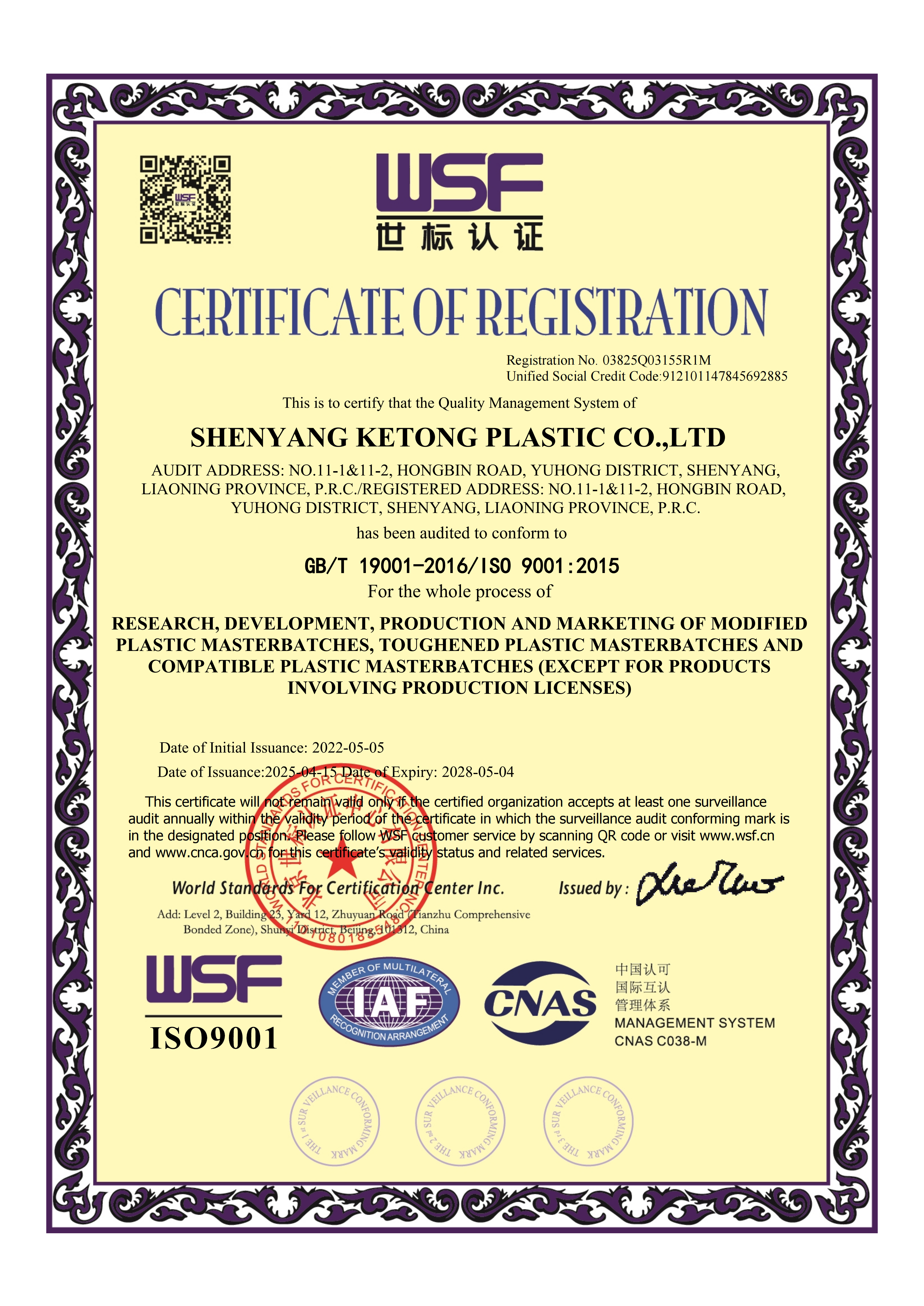
Shenyang Ketong New Materials Co., Ltd. (KETONG) is a functional polymer materials manufacturer based in Shenyang, Liaoning, China, producing polymer compatibilizers, tougheners and functional adhesive resins. Its production capacity is 60,000 tons per year, and its management systems covering the research, development, production and marketing of modified plastic masterbatches are certified to ISO 9001:2015, ISO 14001:2015 and ISO 45001:2018, with declared applicability to the Global and EU markets. Those certificates evidence process discipline. They are not product compliance certificates, and the distinction matters throughout this guide.
Detailed compliance checkpoints for EU-bound grafted polymer
The checklist below is organised by the question a buyer is actually trying to answer, rather than by regulation number. Each checkpoint states what has to be established, who is responsible, and what evidence is normally acceptable.
Checkpoint 1: REACH - what has to be registered and what does not
Under REACH, the polymer backbone itself is generally not registered as a discrete substance. The registration trigger sits with the non-polymer components that a technical grafted polymer carries: residual monomer, initiator residues, stabilisers, antioxidants, carrier resins and process aids. Each of those is a substance in its own right and may carry its own registration obligation, depending on volume and use.
This is the single most misunderstood point in grafted polymer sourcing. A supplier statement reading only "polymer, exempt from REACH" is technically incomplete, because it says nothing about the substances travelling with the polymer.
A second structural point is who is allowed to register. A company established outside the EU cannot hold a registration in its own name. In practice the importer registers, or the non-EU supplier appoints an Only Representative inside the EU to hold the registration and carry the corresponding duties. Buyers should ask directly which of the two arrangements is in place for the specific grade being purchased, because the answer determines who is exposed if a downstream authority asks.
Checkpoint 2: residual maleic anhydride and non-polymer content
Residual maleic anhydride is the component that most often determines the occupational-hygiene and disclosure content of a grafted polymer SDS. Maleic anhydride is recognised as a skin and respiratory sensitiser, so exposure controls and handling guidance normally appear as a distinct section of the safety data sheet rather than being absorbed into general dust precautions.
Grafting level is therefore not only a technical parameter. Grades described by their MAH content - low, medium, high, or extra high - carry different residual profiles, and the specification a buyer selects has documentation consequences. This is one reason low-odour grades exist as distinct product lines rather than as a marketing variant.
A buyer importing a high-graft grade for a demanding application should expect the file to state clearly what is present, in what range, and under what exposure controls it should be handled. A file that omits this is a warning sign regardless of how complete the rest of the package looks.

Checkpoint 3: RoHS - when a polymer pellet actually enters scope
Directive 2011/65/EU restricts the presence of certain substances in electrical and electronic equipment. The restricted set covers lead, mercury, cadmium, hexavalent chromium, polybrominated biphenyls (PBB), polybrominated diphenyl ethers (PBDE), and four phthalates: DEHP, BBP, DBP and DIBP. Compliance is assessed at the level of each homogeneous material, which is why a declaration covering an assembled product is not automatically meaningful for the raw pellet.
A grafted polymer is not electrical and electronic equipment on its own. The obligation is generated at the equipment, component or part level. The practical question for a buyer is therefore not "is this grade RoHS compliant" in the abstract, but "what will this grade become".
- Out of scope: a MAH grafted compatibilizer used in a multilayer packaging film, a construction profile or a non-electrical industrial moulding does not by itself generate a RoHS obligation.
- In scope: the same compatibilizer used inside a connector housing, a cable component, a switch body or an appliance enclosure becomes part of electrical and electronic equipment and must be covered by a valid restricted-substance position.
- Partially supported: a declaration that covers heavy metals but not the four phthalates does not cover the current restricted set. Reports issued under earlier versions of the restricted list are a recurring gap in supplier documentation.
This is the clearest example of why the same material can pass one customer's audit and fail another's. Buying policy should therefore record the intended end application, and the supplier's declaration should be issued against that application, not as a generic statement.
Checkpoint 4: which supplier documents can actually be verified
Supplier evidence is not equally strong. Some documents carry legal weight; others are declarations of intent. Sorting them correctly tells a buyer how much exposure remains after the file is complete.
The strongest items are the safety data sheet prepared for the specific grafted grade, batch-level certificates of analysis traceable to a production lot, and third-party test reports issued against the restricted substances relevant to the end application. Weaker but still relevant items include management system certificates, which demonstrate that the supplier has controlled processes for producing documents consistently, and supplier declarations of conformity, which are only as reliable as the practice behind them.
Step-by-step: an eight-step pre-import screening sequence
The sequence below is ordered so that each step removes a category of risk before money is committed. It works for a first sample order as well as for a repeat shipment.
- Define the regulatory identity of the purchase. Establish whether you are buying a mixture placed on the EU market, a component, or a material destined for electrical and electronic equipment. Everything downstream depends on this classification.
- Request the safety data sheet for the exact grade. It must name the grafted material, not the carrier polymer, and it must reflect the composition range in the technical data sheet. Compare the two documents against each other.
- Confirm the REACH registration position. Ask who registers, whether an Only Representative is appointed, and which substances in the formulation are covered. Get the answer in writing, tied to the grade code.
- Request restricted-substance evidence matched to the end use. For electrical and electronic applications, ask for coverage of the full current restricted set, including the phthalates. For non-electrical applications, record why the evidence is not required.
- Check the SVHC communication route. Establish how you would be notified if a candidate-list substance above the applicable threshold were present in an article made from the material, and who inside your organisation receives that notification.
- Verify batch traceability. Ask for a certificate of analysis tied to the production lot scheduled for shipment, and confirm that the lot number appears on the shipping documents.
- Write the documentation requirement into the purchase specification. Documents requested verbally are not delivered reliably on the third shipment. Attach the requirement to the technical specification and repeat it in the quality agreement.
- Archive for the retention period, and keep the version history. Regulatory lists change. A file that cannot show which version of a declaration applied to which shipment is difficult to defend later.
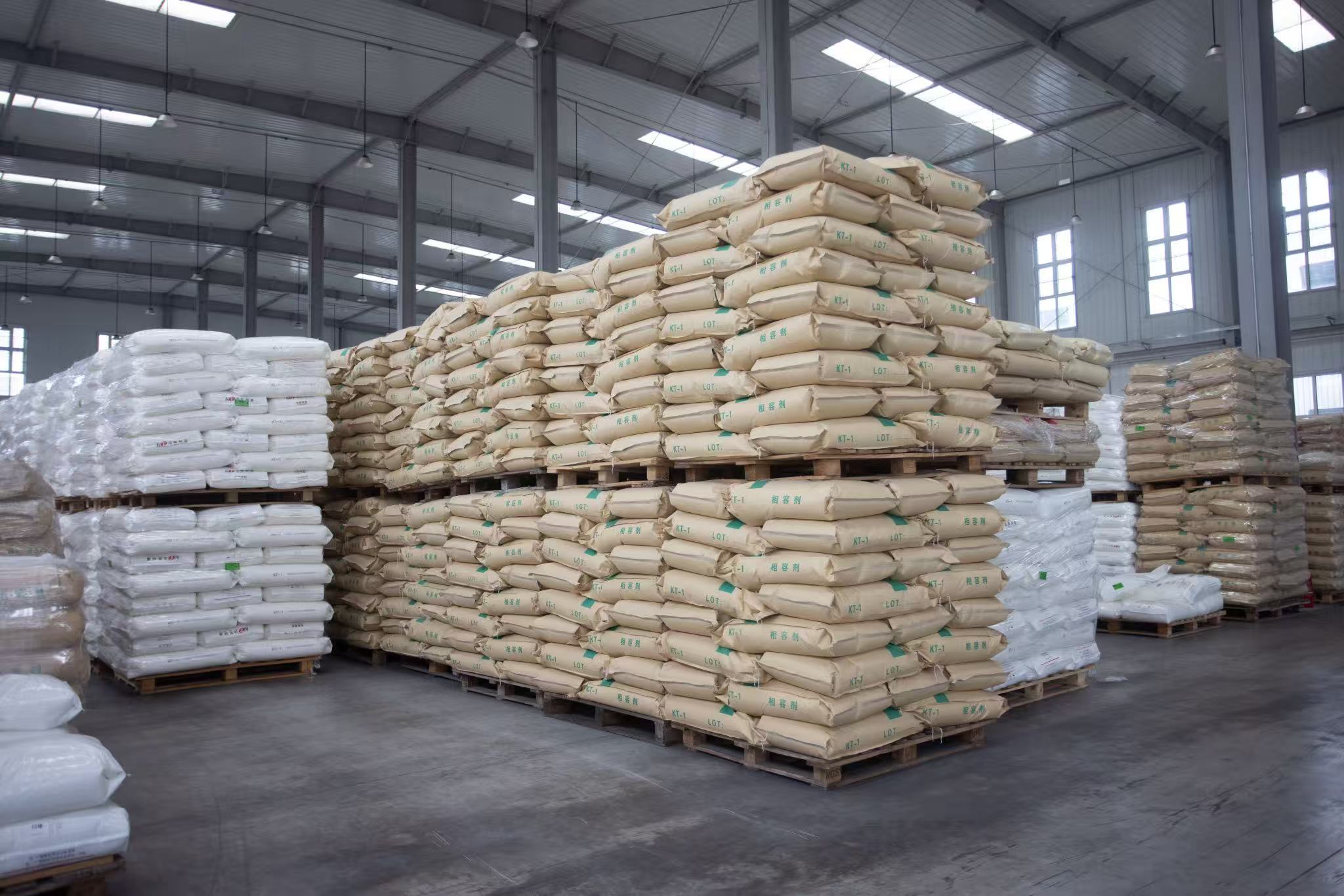
KETONG's own production arrangements are structured around demand-driven scheduling, with monthly capacity in the 5,000 to 6,000 ton range and random sampling inspection as the standard quality control method. For a buyer, those facts matter because they determine how easily a lot-specific document can be produced on request. Random sampling inspection at the production stage is what makes a batch-level certificate of analysis meaningful rather than nominal.
Use cases: where the compliance burden sits in practice
Different applications concentrate the compliance risk in different places. The examples below are drawn from KETONG's documented application experience and illustrate how the end use changes the document set.
Reinforced and toughened polyamide for automotive and industrial parts
Nylon toughening agents based on POE-g-MAH and EPDM-g-MAH are used to raise impact resistance in glass-fibre reinforced polyamide. In one documented case, a modified polymer material manufacturer sourced KT-916K, a Nylon (PA) series toughener based on a MAH-grafted elastomer with a high MAH content (>0.8%), in a 20-ton quantity for reinforced and toughened nylon. The reported outcome was a significantly improved toughening effect with stable performance down to -50°C.
For EU-bound automotive and industrial parts, the RoHS question is usually secondary, but the substance-level documentation in the safety data sheet is not. Residual monomer content and exposure controls are the items most likely to be examined by an occupational safety reviewer at the converting plant, which is a different reviewer from the one handling customs.
Glass-fibre reinforced polypropylene with odour and emission constraints
PP compatibilizers used in mineral-filled and glass-fibre reinforced polypropylene sit in interior and consumer applications where volatile emission and odour are practical constraints. In a documented case, a manufacturer sourced LEP-1B and LEP-1K, low-odour polypropylene series compatibilizers with high MAH content (>0.8%), in a 22-ton quantity for glass-fibre reinforced and mineral-filled polypropylene. The reported result was markedly enhanced impact resistance with low VOC emission and improved ageing resistance.
Low-odour grades are a documentation-relevant category rather than a cosmetic one, because the odour and emission profile originates in the same residual chemistry that appears in the safety data sheet. A buyer specifying a low-odour grade should expect the file to be consistent with that claim.
Multi-layer barrier film for packaging
MAH-g-PE adhesive resins are used as the tie layer in co-extruded barrier structures. In a documented case, a modified polymer material manufacturer sourced KT-NJP2201, a MAH-g-PE adhesive resin with low MAH content (<0.4%), in a 21-ton quantity for the adhesive layer of multi-layer co-extrusion barrier films. The reported outcome was stable adhesion in the co-extrusion process, with excellent adhesion to EVOH and PA, fewer gel spots and good transparency.
This application illustrates the scope boundary clearly. Adhesive resin for a packaging film does not generate a RoHS obligation, but packaging-specific and food-contact considerations apply instead, and the material declaration should be requested against those rules rather than against the electrical and electronic equipment framework.
Electronic and appliance components
ABS compatibilizers such as KT-2 and low-odour ABS compatibilizers such as LEP-2, together with EVA compatibilizers and PPO compatibilizers, are the classes most likely to enter electrical and electronic equipment through housings, connectors or cable constructions. For these, the RoHS evidence package is the binding document, and it must be current with respect to the full restricted set.
Biodegradable and engineering polymer systems
Biodegradable compatibilizers such as KT-36, based on a MAH-grafted polyester elastomer, and PC series tougheners such as KT-17, KT-1701 and KT-1702 follow similar REACH documentation logic but different end-of-life and application frameworks. The common thread is that the safety data sheet, not the marketing claim, determines what can be shipped.
Comparison: REACH and RoHS obligations side by side
The table below summarises how the two frameworks differ for a buyer of grafted polymer. It is intended as a screening tool, not as legal advice.
| Dimension | REACH - Regulation (EC) No 1907/2006 | RoHS - Directive 2011/65/EU |
|---|---|---|
| What it regulates | Substances on their own, in mixtures and in articles placed on the EU market | Certain restricted substances inside electrical and electronic equipment |
| Does a grafted polymer pellet trigger it? | Generally yes, as a mixture, with registration obligations falling on non-polymer components | No, unless the material becomes part of electrical and electronic equipment |
| Who is responsible in the EU | The EU importer, or an appointed Only Representative acting for a non-EU supplier | The producer of the equipment, component or part placed on the market |
| Level of assessment | Substance and mixture level | Homogeneous material level inside the finished equipment |
| Core evidence | Safety data sheet for the grade, registration status, SVHC communication route | Restricted-substance declaration and supporting test reports covering the full restricted set |
| Most common documentation gap | A safety data sheet written for the base resin rather than the grafted grade | Declarations issued before the phthalates were added to the restricted set |
| What a management system certificate does | Supports reliability of the document process | Supports reliability of the document process |
| What it does not do | Does not constitute a registration | Does not constitute a product conformity statement |
In addition to the frameworks above, the European market maintains an SVHC candidate list that is updated periodically. Because the list evolves, the practical requirement is not a one-off declaration but a process for re-confirming the position when the list changes. Buyers should ask suppliers how updates are communicated, and should keep the version history of every declaration they receive.
Worked example: verifiable specifications in a compliant sourcing file
The specifications below come from KETONG's published product data and illustrate the type of grade-level information a buyer should be able to match against the safety data sheet and the certificate of analysis. Grafting level and melt flow rate are stated per grade, because those are the parameters that also drive the substance-level content of the documentation.
| Model | Class | MAH content | Melt flow rate | Density (g/cm³) |
|---|---|---|---|---|
| KT-NJG3304 | Adhesive resin, MAH-g-PE | Low (<0.4%) | 1.8-3.5 (190°C/2.16kg) | 0.92-0.95 |
| KT-12 | PE series compatibilizer | High (>0.8%) | ≥1.0 (190°C/2.16kg) | 0.92-0.96 |
| LEP-1B | Low-odour PP series compatibilizer | High (>0.8%) | ≥80 (190°C/2.16kg) | 0.90-0.92 |
| KT-2 | ABS series compatibilizer | High (>0.8%) | 1.0-4.0 (200°C/5kg) | 1.03-1.08 |
| KT-26 | EVA series compatibilizer | High (>0.8%) | 0.2-2.0 (190°C/2.16kg) | 0.92-0.96 |
| KT-24B | PPO series compatibilizer | High (>0.8%) | 4.0-20.0 (300°C/5kg) | 1.01-1.05 |
| KT-916K | Nylon (PA) series toughener | High (>0.8%) | 9.0-13.0 (235°C/5kg) | 0.86-0.88 |
| KT-36 | Biodegradable series compatibilizer | Medium (0.4-0.8%) | ≥4.0 (190°C/2.16kg) | 1.20-1.23 |
A grade-level file built on these parameters is auditable. Each specification can be checked against a batch certificate, and each batch certificate can be matched to a shipping document. That traceability chain is what an importer is ultimately buying when it selects a supplier for EU-bound shipments.

Frequently asked questions
Does my company need to hold a REACH registration to import MAH grafted polymer into the EU?
The polymer backbone is generally not registered as a discrete substance, but the non-polymer components in the formulation may each carry a registration obligation depending on volume and use. A company established outside the EU cannot hold a registration in its own name, so the registration is normally held either by the EU importer or by an Only Representative appointed by the non-EU supplier. Buyers should ask which arrangement applies to the specific grade, because the answer determines which legal entity carries the obligation.
What documentation support can a supplier like KETONG provide for compliance purposes?
A supplier should be able to issue a safety data sheet prepared for the specific grafted grade, batch-level certificates of analysis traceable to the production lot, and declarations of restricted-substance status covering the substances relevant to the end application. KETONG's management systems covering the research, development, production and marketing of modified plastic masterbatches are certified to ISO 9001:2015, ISO 14001:2015 and ISO 45001:2018, with declared Global and EU applicability. Those certificates demonstrate document and process control; they are not product conformity statements and do not replace grade-level REACH or RoHS evidence.
How does compliance documentation affect the cost of an EU-bound shipment?
Compliance activity is a cost line rather than a product feature. Preparing and maintaining a grade-specific safety data sheet, commissioning restricted-substance testing matched to the end application, screening against the SVHC candidate list, and where applicable appointing an Only Representative all carry cost, and some of them recur each time the lists change. The practical approach is to treat these as an access cost and to build them into the landed-cost calculation from the first quotation, rather than discovering them at the customs stage where they become a schedule cost as well.
Can I validate a grafted polymer grade with a sample before committing to bulk volume?
Yes. KETONG's minimum order quantity is set on demand, which allows a buyer to request an evaluation quantity before committing to production volume. The sample stage is also the most efficient point to test the documentation chain: request the grade-specific safety data sheet and a batch certificate of analysis together with the sample, and confirm that the documents describe the material actually delivered. Grafting level and melt flow rate are the parameters that should match between the sample, the technical data sheet and the certificate.
What should I expect on lead time when documentation is part of the order?
KETONG schedules production on a demand-driven basis, with monthly capacity in the 5,000 to 6,000 ton range. The point that catches importers out is sequencing: documents such as the safety data sheet and batch certificate follow the production lot, while third-party testing or an Only Representative appointment runs on a separate track and does not move at production speed. Buyers should plan the documentation timeline alongside the production timeline rather than assuming the two finish together, particularly for a first shipment.
Conclusion: buy the file, not just the pellet
EU REACH and RoHS compliance for maleic anhydride grafted polymer imports is a documentation discipline more than a technical one. The material itself rarely causes the problem. What causes the problem is a safety data sheet written for the wrong material, a restricted-substance declaration that predates the current restricted set, an unclear answer on who holds the registration, and a batch paper trail that stops at the pallet.
The screening sequence in this guide removes those risks in a repeatable order: classify the purchase, demand grade-level documents, confirm the registration position, match the restricted-substance evidence to the end application, secure the traceability chain, and archive by version. Applied consistently, it turns compliance from a recurring emergency into a routine procurement step.
Next step
If you are preparing an EU-bound grafted polymer order and want the grade-level documentation pack reviewed before you commit, KETONG can provide the technical data, batch certificates and management system records for the models you are evaluating. Bulk order volumes and lead times are confirmed per enquiry.
Contact Alice Wang, General Manager, at wangyanqiu@syketong.com or WhatsApp +86 13998121502. The full product catalogue is available for download here: KETONG product catalogue (PDF). Company information: compatibilizer.com.
Have Questions or Need More Details?
Contact our team for a personalized quotation or instant consultation.
Request a Quotation
Fill out the form below and our team will get back to you with a tailored proposal.
WhatsApp Direct Chat
Prefer to chat in real-time? Message us on WhatsApp for instant assistance & quick answers.
- Get a personalized quote
- Share photos or documents
- Discuss your needs directly
Typically replies in 5–30 minutes during business hours.