
Maleic Anhydride Grafting 101: How Compatibilizers, Tougheners, and Adhesive Resins Work
Maleic Anhydride Grafting 101: How Compatibilizers, Tougheners, and Adhesive Resins Work
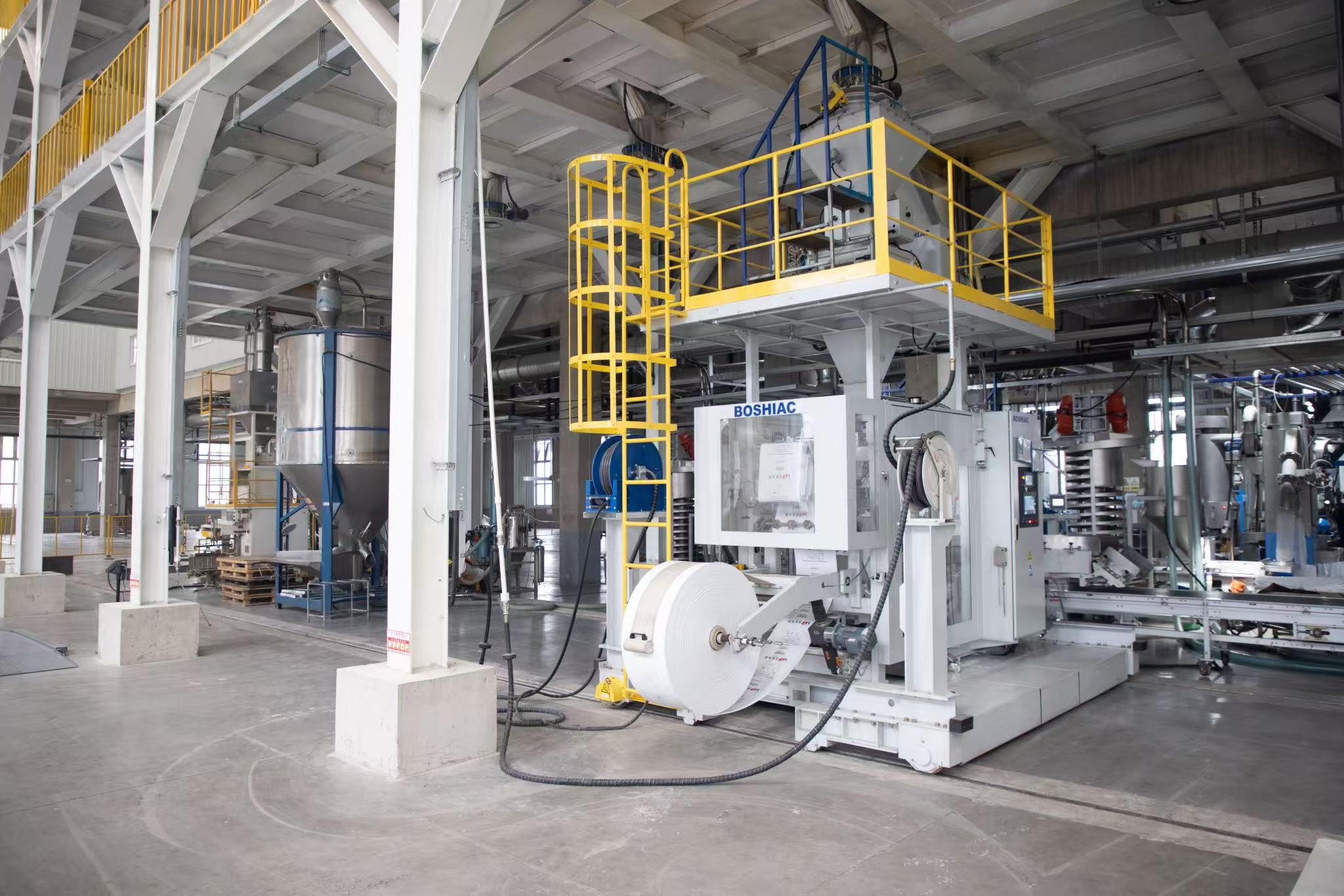
Maleic anhydride grafting turns ordinary polyolefins into polymers that can bond to nylon, EVOH, glass fibre and mineral fillers.
Maleic anhydride grafting is a polymer modification in which reactive anhydride groups are attached to a nonpolar plastic chain, giving that chain a polar, chemically active handle. The change is small on paper and large in practice: a polyethylene, polypropylene, POE, EPDM, SEBS, ABS, PPO or EVA backbone that would normally slide past nylon, EVOH, glass fibre or metal can suddenly bond to it. That single modification is why MAH-grafted polymers appear in three distinct roles in a compounding plant — as compatibilizers, as tougheners, and as adhesive resins.
When a part fails at an interface — a glass-fibre-reinforced polypropylene component that snaps instead of bending, a co-extruded barrier film that delaminates, a soft TPE grip that peels off a nylon housing — the root cause is frequently the same: two materials with incompatible surface chemistry sitting next to each other. Maleic anhydride (MAH) grafting is the standard industrial answer, and understanding it is the difference between specifying the right grade and re-running a trial for the third time.
This guide is written for technical newcomers and for procurement teams who need to buy these materials intelligently. It explains what grafting does, where the three product families differ, and how to read the numbers on a datasheet. It is a category-level explainer, not a supplier shortlist or a purchasing checklist.
What Maleic Anhydride Grafting Actually Means
Maleic anhydride is a cyclic anhydride — a small, polar, highly reactive molecule. In grafting, MAH units are attached onto an already-polymerised backbone rather than polymerised into a brand-new chain. The output is a graft copolymer: the original nonpolar polymer chain, carrying a small number of polar anhydride side groups along it.
This two-part structure is the whole point. The backbone decides which plastic the material feels at home in — a polypropylene backbone (PP-g-MAH) is compatible with a PP matrix, a polyethylene backbone (PE-g-MAH) with PE, and the same logic applies to ABS-g-MAH, PPO-g-MAH, EVA-g-MAH, POE-g-MAH, EPDM-g-MAH and SEBS-g-MAH. The anhydride group decides what the material can react with: amine and hydroxyl groups on nylon (PA) chains, EVOH, polyester surfaces, glass fibre sizing and mineral fillers.
In practice, the anhydride ring opens at processing temperature and reacts with those polar groups, forming a covalent link at the interface rather than relying on friction and mechanical interlocking. That is why a grafted polymer can hold a polyolefin and a polar engineering plastic together in a way that simple blending cannot.
The amount of MAH on the chain — the graft level — is normally quoted as a band rather than a single figure, and suppliers tend to use a consistent vocabulary for those bands:
- MAH Low (<0.4%) — lower reactivity, often used where flow, optics or adhesion balance matters more than maximum coupling.
- MAH Medium (0.4–0.8%) — the general-purpose band for compatibilizers and many adhesive resins.
- MAH High (>0.8%) — higher coupling density for demanding filler and nylon interfaces.
- MAH Extra High (≥4.0%) — used in specific engineering-plastic grades where a strong, concentrated interface reaction is required.
The Problem It Solves: Polymers That Refuse to Bond
Polyolefins are nonpolar and chemically inert. That inertness is why they resist moisture, chemicals and degradation — and also why they do not stick to anything polar. Nylon, EVOH, PC, POM, polyester and glass fibre surfaces are polar. When the two are melt-blended or co-extruded, the interface between them is weak: the phases separate, the boundary layer carries no chemical bond, and stress concentrates exactly where the material is least able to resist it.
The symptoms are recognisable across industries. In filled and reinforced compounds, poor interfacial adhesion shows up as filler pull-out and lower impact strength than the fibre or mineral loading would suggest. In multi-layer films, it shows up as delamination, gel spots and haze. In overmoulded parts, it shows up as peel failure at the bond line between a soft elastomer and a rigid substrate. In each case, adding more of the base resin does not help, because the problem is not the amount of material — it is the chemistry at the boundary.
There are only two ways to fix that boundary: replace one of the polymers with something more compatible, or add a bridge. Grafting manufactures the bridge. A grafted polymer sits at the interface, anchors into the nonpolar phase through its backbone, and reacts into the polar phase through its anhydride groups.
Where Grafted Polymers Sit in the Market
Maleic anhydride grafting is not a niche laboratory technique; it sits inside a large and still-growing chemicals category. Grand View Research estimates the global maleic anhydride market at USD 4.39 billion in 2023, projected to reach USD 5.86 billion by 2030, with Asia Pacific accounting for a 52.1% revenue share in 2023 and China expected to grow at a CAGR of 5.4% through 2030.
The grafted-polymer segment specifically is smaller but expanding in parallel. Business Research Insights projects the global maleic anhydride graft polymer market at USD 1.42 billion in 2026, reaching USD 2.16 billion by 2035 at a CAGR of 4.7%. Within that, one estimate from Dataintelo puts the grafted polyethylene (MAH-g-PE) segment alone at USD 1.24 billion in 2024, moving toward USD 2.08 billion by 2033.
Demand is anchored in applications where mixed materials are unavoidable. ChemAnalyst data indicates that automotive applications represent 42% of total demand for polyolefin elastomers (POE), a polymer family frequently grafted with MAH for toughening. The same logic drives packaging, where multi-layer structures combine polyolefin seal layers with polar barrier layers, and electrical and industrial applications, where adhesion to metal or to filled compounds is required.
Supply is correspondingly international. Mordor Intelligence lists Huntsman, Dow, LyondellBasell, Mitsui Chemicals and SK Functional Polymer among the key participants in the maleic anhydride value chain, alongside a large base of regional producers — including Chinese manufacturers such as Shenyang Ketong New Materials Co., Ltd. — that supply grafted grades to compounders, film producers and converters. For buyers, that means the category is well supplied but the grade-level detail is where projects succeed or fail.
The Three Job Families: Compatibilizers, Tougheners, and Adhesive Resins
The three families are chemically related — most are made from the same grafting reaction — but they are engineered for different jobs. A useful way to separate them is to ask what the interface has to do: hold two polymers together (compatibilizer), absorb impact energy inside one polymer (toughener), or bond a polyolefin to a polar substrate as a dedicated layer (adhesive resin).
Shenyang Ketong New Materials Co., Ltd. (KETONG) is a Chinese producer of functional polymer materials — compatibilizers, tougheners and adhesive resins — based in Shenyang, Liaoning, and founded in 2003. The company operates two Shenyang sites: the original Shenyang Ketong Plastics facility covers 30,000 square metres with more than 10 imported production lines and an annual production capacity of 50,000 tons, while the newer Shenyang Ketong New Materials site, completed in 2023, adds 20,000 square metres of building area with a planned capacity of 60,000 tons per year. Its grades are used below as concrete examples of how each role is engineered.
Compatibilizers: Making Dissimilar Materials Share an Interface
A compatibilizer reduces interfacial tension between two phases and creates chemical coupling across the boundary. In a filled PP compound, it bonds the polyolefin matrix to the glass fibre or mineral surface; in a polymer blend, it stabilises the morphology so the dispersed phase does not coalesce; in a film structure, it prevents the layers from separating.
The compatibilizer range is organised by backbone, because the backbone must match the polyolefin phase in the compound:
- PP series (MAH-g-PP): KT-1, KT-1D, KT-1H — for polypropylene matrices, including glass-fibre-reinforced and mineral-filled systems.
- Low-odor PP series (MAH-g-PP): LEP-1B, LEP-1K — the same PP chemistry, specified where odour and volatile emission are controlled.
- ABS series (MAH-g-ABS): KT-2, KT-2H, KT-3, KT-2M; low-odor ABS: LEP-2.
- PE series (MAH-g-PE): KT-12, KT-12A, KT-12D, KT-12B, KT-12B01, KT-12B05, KT-1208B, KT-1220B.
- PPO series (MAH-g-PPO): KT-24, KT-24B, KT-24F — for high-temperature engineering blends.
- EVA series (MAH-g-EVA): KT-26, KT-2628, KT-2628A, KT-2628B, KT-2628C.
- Biodegradable series (MAH-g-polyester elastomer): KT-36.
The numbers on these grades illustrate how widely grafted compatibilizers are tuned. KT-1 carries a medium graft level (0.4–0.8% MAH) with a melt flow rate of 90–120 g/10min at 190°C/2.16 kg and a density of 0.91–0.95 g/cm³ — a high-flow grade designed to disperse well in a PP melt. KT-3 moves to an extra-high graft level (≥4.0% MAH) at 1.0–3.0 g/10min (200°C/5 kg) and 1.00–1.05 g/cm³ for ABS-based systems. LEP-1B uses a high graft level (>0.8% MAH) with a melt flow rate of ≥80 g/10min (190°C/2.16 kg) and 0.90–0.92 g/cm³, paired with a low-odour specification.
The low-odour variants exist because odour and volatile organic compound (VOC) limits are now written into automotive interior, appliance and consumer-goods specifications. A grafted polymer that performs perfectly in mechanical terms can still fail an interior part if its emission profile is unacceptable — which is why the LEP series is treated as a separate specification rather than a cosmetic variant.
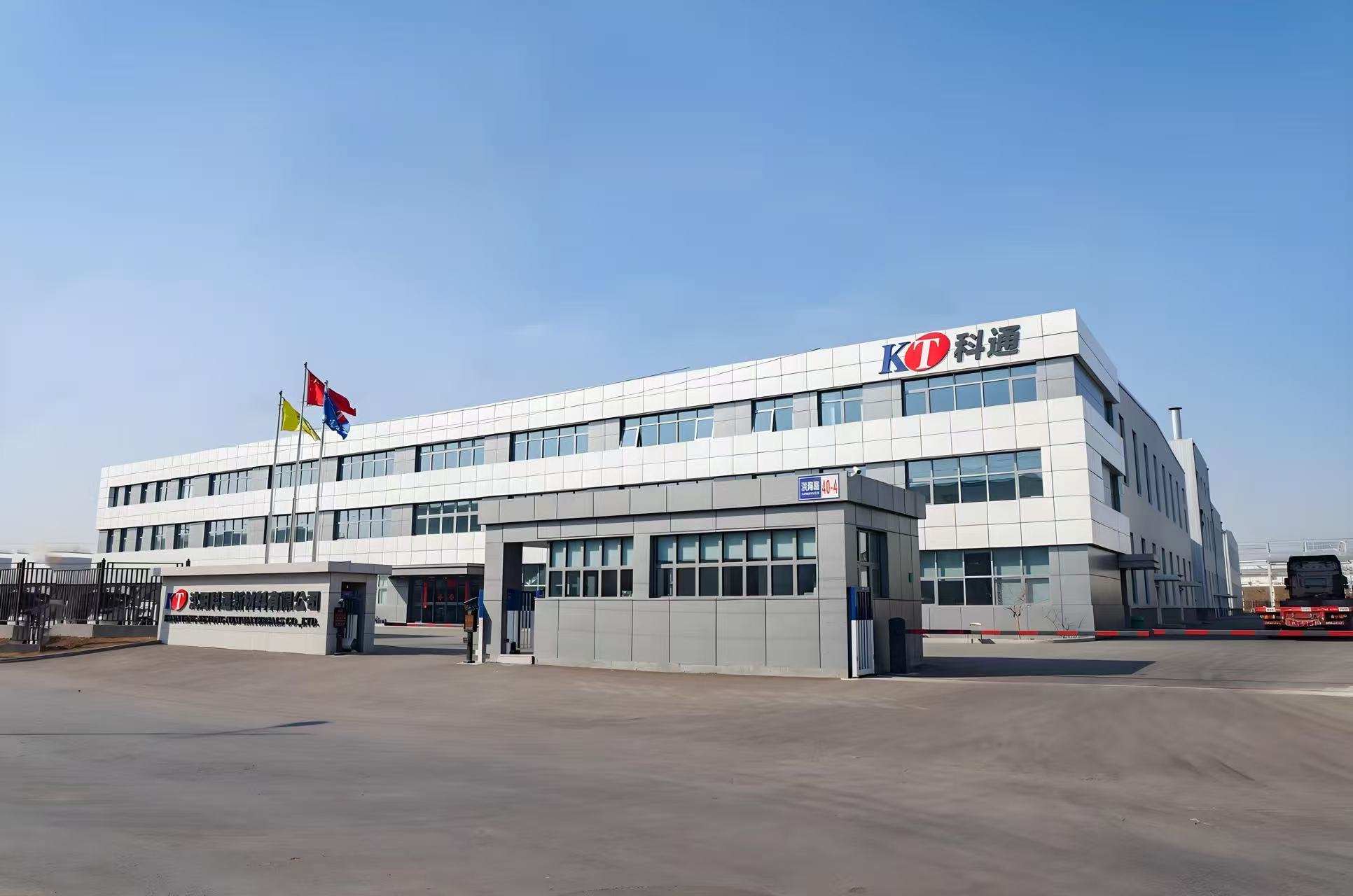
MAH-grafted polymers are supplied as pellets with a defined graft level, melt flow rate and density for each grade.
Tougheners: Buying Back Impact Strength Without Losing the Base Resin
Engineering plastics are strong and stiff but often brittle. A toughener introduces a finely dispersed elastomer phase that absorbs impact energy and blunts crack propagation. Grafting matters here because the elastomer phase has to stay bonded to the matrix: without a grafted coupling group, the rubber particles act as defects rather than energy absorbers, and impact performance can even drop.
This is most visible in nylon. PA6 and PA66 have amine end groups that react readily with grafted anhydride, so MAH-grafted elastomers — POE-g-MAH, EPDM-g-MAH and SEBS-g-MAH — are the standard toughening route. KETONG's nylon (PA) series includes KT-913, KT-913A, KT-915, KT-915A, KT-915B, KT-915C, KT-915CA, KT-915E, KT-915F, KT-915H, KT-915K, KT-9015, KT-903, KT-906, KT-9, KT-9C and KT-916K, based on POE-g-MAH or MAH-g-elastomer chemistry, plus KT-7 and KT-8 on EPDM-g-MAH and KT-25 on SEBS-g-MAH.
Other engineering plastics need their own coupling chemistry. The ABS series uses KT-4 (butadiene terpolymer) at 3%–10% dosage. The PC series includes KT-17, KT-1701, KT-1702 and KT-31, with dosage in the 3%–10% range for the first three and 1%–3% for KT-31. POM is covered by KT-28 and KT-28A at 5%–10%. The polyester series — KT-22, KT-33, KT-30, KT-35, KT-35G, KT-35G01, KT-3502, KT-3505 and KT-3506 — is built on glycidyl methacrylate (GMA) chemistry rather than maleic anhydride, because polyester end groups react more effectively with epoxy functionality; dosage runs from 3%–5% up to 3%–20% depending on the grade.
Dosage ranges for the nylon tougheners sit between 3% and 25%, with narrower windows for specific grades, for example 3%–20% for KT-9 and KT-9C and 5%–20% for KT-915C and KT-915CA. Those ranges are wide because the optimum depends on the base resin, the required notched impact value and the processing window — which is why trial validation rather than datasheet arithmetic settles the final loading.
Adhesive Resins: The Tie Layer That Holds a Structure Together
Adhesive resins are grafted polymers used as a dedicated bonding layer rather than as a dispersed additive. In a multi-layer film or pipe coating, the tie layer has one face in contact with a nonpolar polyolefin and the other reacting with a polar substrate such as EVOH, PA, polyester or metal. The graft level, melt flow rate and density are tuned for the co-extrusion line: too little flow and the layer will not draw down; too much and the layer becomes unstable at the die.
KETONG's adhesive resin range is built on MAH-g-PE chemistry: KT-NJ001 (MAH high, >0.8%; MFR 0.3–1.5 g/10min at 190°C/2.16 kg; density 0.91–0.93 g/cm³), KT-NJP2201 (MAH low, <0.4%), KT-NJM2203, KT-NJM3205 and KT-NJP7103 (all MAH medium, 0.4–0.8%). The KT-NJE2202 and KT-NJE2202A grades in the same family are listed as MAH-g-PP type. These grades are used with an 'appropriate usage' dosing approach rather than a fixed percentage, because the tie layer thickness is set by the film structure, not by the compound formulation.
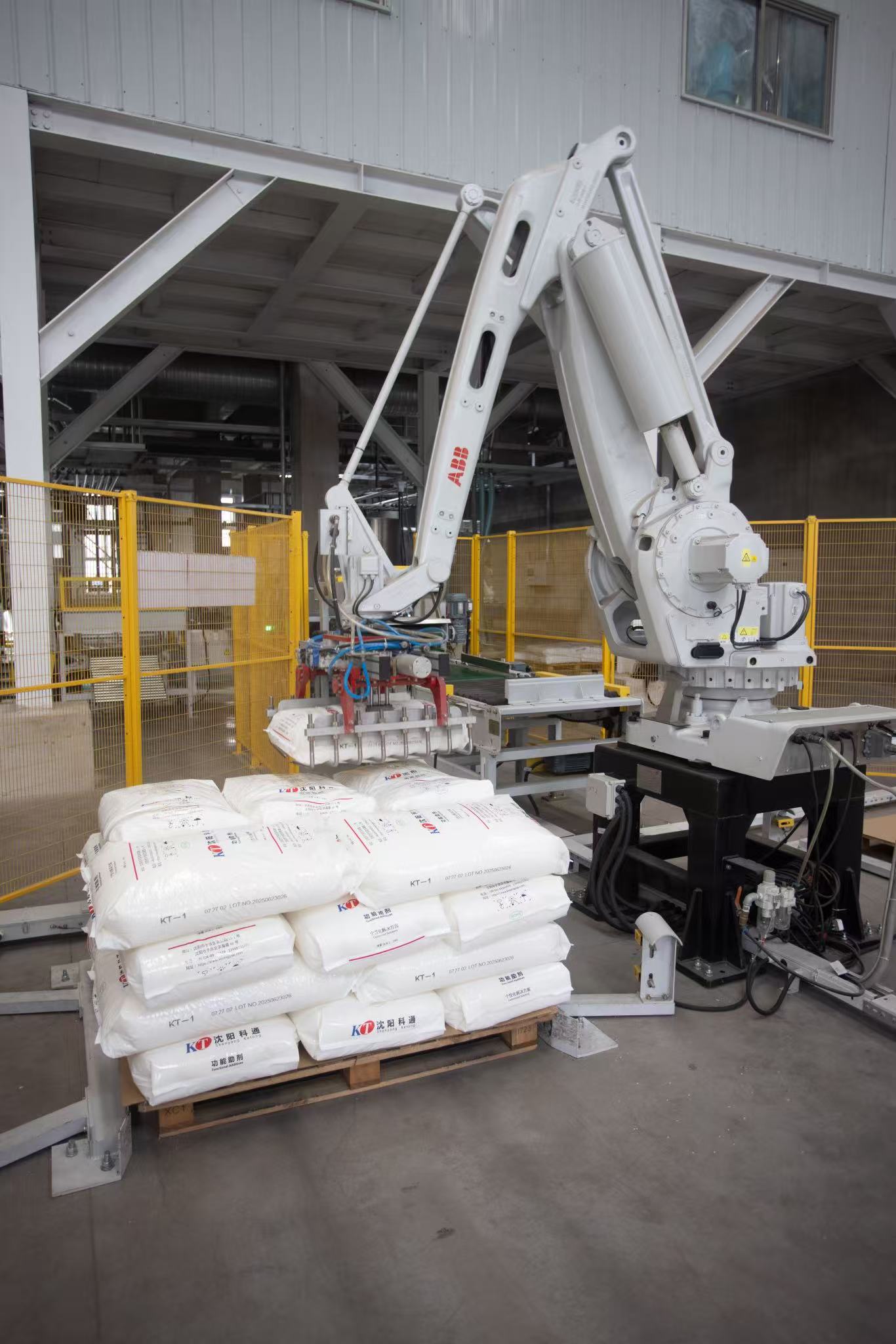
Consistency between batches depends on controlled grafting and material handling, not only on the formulation.
The TPE Overmolding Case: What a Compatibilizer Does at a Nylon Interface
Overmoulding a soft TPE grip or seal onto a rigid nylon component is one of the clearest illustrations of why grafting exists. The TPE is typically a nonpolar elastomer compound, while nylon is polar and carries reactive amine end groups. Without a bridge at the boundary, the two materials rely on mechanical interlocking alone, and the bond fails by peeling along the interface when the part is loaded or aged.
A compatibilizer for TPE elastomer overmolding nylon is designed to occupy that boundary. Its polyolefin-compatible backbone entangles with the TPE phase, while its grafted anhydride groups react with the PA surface, converting a physical contact into a chemical bond. The grade that fits best depends on the TPE base polymer (SEBS, POE or EPDM chemistry behaves differently), the nylon type and its glass content, the part geometry, and the odour or VOC limits of the application — which is where low-odour PP compatibilizers such as LEP-1B and LEP-1K enter the picture, with high graft levels (>0.8% MAH) and melt flow rates of ≥80 and ≥60 g/10min respectively at 190°C/2.16 kg.
What matters for a newcomer is the principle rather than a specific grade number: overmoulding adhesion on nylon is a chemistry problem at the interface, and it is solved by putting the right grafted polymer at that interface before the part is moulded.
Step-by-Step: How to Read a MAH-Grafted Polymer Datasheet
Grafted polymer datasheets look similar from supplier to supplier, but the numbers only make sense if you read them in the right order. The sequence below is the one that prevents most specification errors.
- Identify the backbone first. PP-g-MAH, PE-g-MAH, ABS-g-MAH, PPO-g-MAH, EVA-g-MAH and the elastomer-based grades are not interchangeable. The backbone must match the continuous phase you are modifying, or the grafted polymer will migrate to the wrong place in the melt.
- Read the graft level band, not just the word 'high'. Low (<0.4%), medium (0.4–0.8%), high (>0.8%) and extra high (≥4.0%) describe how much reactive functionality is available at the interface. Higher is not automatically better — it usually comes with a different flow behaviour and a different optimum dosage.
- Check the melt flow rate together with its test condition. A figure of 90–120 g/10min at 190°C/2.16 kg (KT-1) and a figure of 1.0–4.0 g/10min at 200°C/5 kg (KT-2) are measured under different loads and temperatures. Comparing them directly is meaningless. Always match the condition before comparing grades.
- Use density for feeding and for the compound target. Density values such as 0.90–0.94 g/cm³ for the PE series or 1.00–1.10 g/cm³ for the PPO series affect gravimetric feeding settings and the final part weight.
- Match the dosage range to your matrix. Nylon tougheners typically run 3%–25%, EVA compatibilizers 5%–10%, the biodegradable compatibilizer KT-36 3%–5%, and PC toughener KT-31 1%–3%. Starting inside the published range saves trials; starting outside it wastes them.
- Ask whether odour and VOC are specified. If the part is an automotive interior, an appliance component or a consumer product, the low-odour grades (LEP-1B, LEP-1K, LEP-2) belong in the evaluation set from the beginning rather than as an afterthought.
- Request application evidence, not just specifications. A datasheet describes a grade; a case record describes how that grade behaved in a comparable process. The two together are what justify a decision.
Use Cases: What Changes in Real Projects
Grafted polymers are easiest to understand through the process problems they solve. The following project outcomes are drawn from KETONG's application records and show how each family behaves in production.
Multi-layer co-extrusion barrier film (adhesive resin). A modified polymer material manufacturer used KT-NJP2201 as the adhesive layer for multi-layer co-extrusion barrier films, with 21 tons supplied over a one-year period to operations in China, the United Kingdom, India and Vietnam. The reported highlights were excellent adhesion to EVOH and PA, fewer gel spots and good transparency, with stable adhesion performance in the co-extrusion process and compliance with food packaging barrier and safety requirements. For a film producer, the practical meaning is a stable tie layer without the optical defects that show up when interfacial adhesion is incomplete.
Reinforced and toughened nylon (toughener). In a reinforced and toughened nylon application, KT-916K was supplied at 20 tons over a year to customers in the United Kingdom, India, Vietnam and China. The result was a significantly improved toughening effect, with stable and reliable performance and low-temperature resistance down to -50°C. That low-temperature figure is the useful part of the record: it tells the buyer that the toughening mechanism still works when the part is cold, not only at room temperature.
Glass-fibre and mineral-filled polypropylene (low-odour compatibilizer). A manufacturer using glass-fibre-reinforced polypropylene and mineral-filled polypropylene adopted LEP-1K and LEP-1B, with 22 tons delivered across a year to sites in the United Kingdom, India, Vietnam, China and Italy. The project reported remarkably enhanced impact resistance, low VOC emission and enhanced aging resistance. This is the case where the low-odour specification and the mechanical performance had to be met at the same time.
Glass-fibre-reinforced polypropylene (standard compatibilizer). A separate glass-fibre-reinforced PP project used KT-1, KT-1D and KT-1H at 20 tons over a year across the United Kingdom, India, Vietnam and China, achieving enhanced impact resistance in the final material with excellent impact strength retention, good processability and greatly improved compatibility between materials. The emphasis on processability is worth noting: improved compatibility that costs throughput on the line is not a solution a compounder will keep.
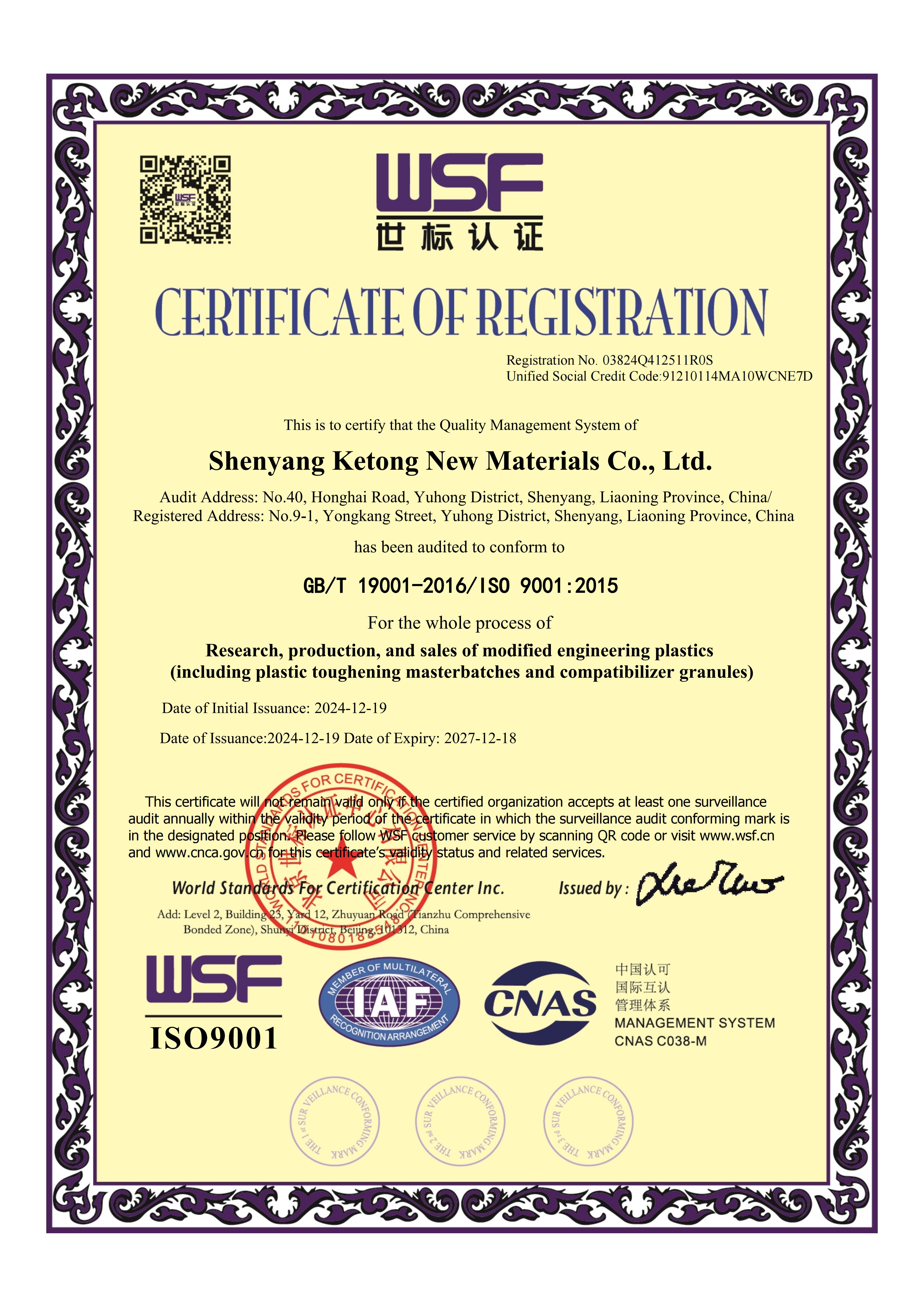
KETONG holds ISO 9001:2015 certificate 03825Q03155R1M, valid from 15 April 2025 to 4 May 2028.
Comparison Table: Compatibilizer vs Toughener vs Adhesive Resin
The three families overlap in chemistry but not in function. The table below compares them on the dimensions that matter during evaluation.
| Dimension | Compatibilizer | Toughener | Adhesive Resin |
|---|---|---|---|
| Primary function | Bonds dissimilar polymers or fillers across an interface | Raises impact resistance by dispersing an elastomer phase | Acts as a dedicated tie layer between a polyolefin and a polar substrate |
| Typical backbone | MAH-g-PP, MAH-g-PE, MAH-g-ABS, MAH-g-PPO, MAH-g-EVA, MAH-g-polyester elastomer | POE-g-MAH, MAH-g-elastomer, EPDM-g-MAH, SEBS-g-MAH, butadiene terpolymer, GMA-grafted grades for polyester/PC | MAH-g-PE and MAH-g-PP type grades |
| Graft level seen in KETONG grades | Medium (0.4–0.8%) to High (>0.8%); KT-3 ABS at Extra High (≥4.0%) | Medium to Extra High — KT-913 medium, KT-915 high, KT-17 at ≥4.0% | Low (<0.4%) to High (>0.8%) — KT-NJ001 at high, KT-NJP2201 at low |
| Dosage guidance | 'Adjust appropriately' for most PP/PE/ABS/PPO grades; 5%–10% for EVA series; 3%–5% for KT-36 | Nylon 3%–25%; ABS 3%–10%; PC 3%–10% (KT-31 1%–3%); POM 5%–10%; polyester 3%–20% | 'Appropriate usage' — layer thickness is set by the film or coating structure |
| Where it is used | Glass-fibre-reinforced PP, mineral-filled PP, polymer blends, biodegradable compounds, TPE overmoulding interfaces | Nylon, PC, POM, polyester and ABS parts that must absorb impact | Multi-layer co-extrusion with EVOH or PA, barrier films and coating structures |
| Evidence to request | Impact retention, VOC/odour data, compatibility claims for the specific filler system | Toughening effect and low-temperature performance data | Adhesion to the specific barrier resin, gel-spot and transparency results |
Alongside the functional comparison, the graft level and flow figures themselves deserve a reference table, because they are the two numbers most often misread:
| Graft band | Example grade | Melt flow rate (condition) | Density (g/cm³) |
|---|---|---|---|
| Low (<0.4%) | KT-NJP2201 (adhesive resin) | 1.0–3.0 g/10min (190°C/2.16 kg) | 0.90–0.93 |
| Medium (0.4–0.8%) | KT-1 (PP compatibilizer) | 90–120 g/10min (190°C/2.16 kg) | 0.91–0.95 |
| High (>0.8%) | KT-12 (PE compatibilizer) | ≥1.0 g/10min (190°C/2.16 kg) | 0.92–0.96 |
| High (>0.8%), low odour | LEP-1B (low-odor PP compatibilizer) | ≥80 g/10min (190°C/2.16 kg) | 0.90–0.92 |
| Extra high (≥4.0%) | KT-3 (ABS compatibilizer) | 1.0–3.0 g/10min (200°C/5 kg) | 1.00–1.05 |
Frequently Asked Questions
1. Do MAH-grafted polymers fall under EU REACH, and what compliance documents should a buyer request?
Maleic anhydride grafted polymers fall within the scope of EU REACH (EC 1907/2006) registration, and ASTM D1248 is a standard commonly referenced for PE extrusion materials. On the supplier side, Shenyang Ketong New Materials Co., Ltd. holds ISO 9001:2015 certificate 03825Q03155R1M issued by World Standards for Certification Center Inc., valid from 15 April 2025 to 4 May 2028, covering the research, development, production and marketing of modified plastic masterbatches, toughened plastic masterbatches and compatible plastic masterbatches; the company also holds ISO 14001:2015 certificate 03825E03153R1M and ISO 45001:2018 certificate 03825S03154R1M issued by the same body. A complete compliance pack for a specific grade should additionally contain that product's REACH registration status and, where food contact is involved, the food-contact declaration required by the destination market — the same discipline applied in the multi-layer co-extrusion project that had to meet food packaging barrier and safety requirements.
2. How do I decide whether my problem needs a compatibilizer, a toughener or an adhesive resin?
Match the product family to the failure mode. If two materials separate from each other — a filled PP compound losing impact because the glass fibre and matrix do not bond, or a blend whose phases coalesce — the answer is a compatibilizer, chosen so that its backbone matches the continuous phase (PP-g-MAH for PP, PE-g-MAH for PE, ABS-g-MAH for ABS, and so on). If a single material is too brittle and needs impact energy absorbed inside it, the answer is a toughener, with the backbone matched to the matrix chemistry (POE-g-MAH, EPDM-g-MAH or SEBS-g-MAH for nylon, GMA-grafted grades for polyester and PC). If the requirement is a separate bonding layer between a polyolefin and a polar substrate such as EVOH, PA or metal, the answer is an adhesive resin for tie-layer extrusion. Using a toughener where a compatibilizer is needed is a common and expensive mistake.
3. What drives the cost of MAH-grafted polymers, and do low-odour grades change the calculation?
Grafted polymers are quoted grade by grade rather than from a published price list, and four variables explain most of the difference between quotes. The first is the base polymer: an engineering-plastic-compatible backbone costs more than a commodity polyolefin backbone. The second is the graft level — a medium-grade PP compatibilizer such as KT-1 and an extra-high-grade ABS compatibilizer such as KT-3 are different products, not different pack sizes. The third is the performance specification attached to the grade, including melt flow window and whether a low-odour/low-VOC variant such as LEP-1B, LEP-1K or LEP-2 is required. The fourth is commercial: documentation, packaging, and order volume, with MOQ customizable on demand. Low-odour grades should be evaluated against the VOC specification of the final part, because the relevant question is whether the emission limit can be met, not whether the grade is nominally more expensive.
4. Can we sample a grade and validate it before committing to a volume order?
Yes. Trial validation is the normal route in this category, and it is how the application records referenced above were generated — the nylon toughening project using KT-916K and the barrier film project using KT-NJP2201 were both 20–21 ton programmes that began with evaluation rather than with a bulk commitment. When requesting samples, specify the base resin and grade, the filler or barrier system, the processing method and temperature profile, the target property (impact, adhesion, VOC), and the required documentation. For KETONG samples and technical documents, contact Alice Wang, General Manager, at wangyanqiu@syketong.com or +86 13998121502 (WhatsApp: +86 13998121502); the full grade list is available in the company brochure linked at the end of this article.
5. What lead time and production capacity should a buyer plan for?
KETONG schedules production on a demand-driven basis rather than quoting a fixed calendar lead time, against a monthly capacity of 5,000–6,000 tons across its compatibilizer, toughener and adhesive resin lines. In practice this means the trial date should be agreed first and the production slot confirmed against it, since the schedule responds to the confirmed order rather than to a standing queue. Minimum order quantity is customizable on demand, and after-sales support covers return, replacement and refund for quality issues. Buyers planning a line trial should therefore raise the schedule question at the sampling stage rather than after the specification has been frozen — and can start that conversation with the contact details above or by downloading the brochure below.
Conclusion: Grafting Is a Chemistry Decision, Not a Commodity Purchase
Maleic anhydride grafting solves a specific and recurring problem: nonpolar polymers and polar materials do not bond to each other, and no amount of processing adjustment changes that. Grafting adds reactive anhydride groups to a polyolefin backbone so that the polymer can anchor into one phase and react into the other, and the three commercial families that result — compatibilizers, tougheners and adhesive resins — differ by the job they perform at the interface, not by the underlying idea.
For a technical newcomer, the working sequence is straightforward: identify the interface that is failing, choose the family that matches that failure mode, then choose the backbone that matches the continuous phase, then read the graft level and melt flow rate under the correct test condition, then validate the dosage in a trial. For a procurement team, the same sequence becomes a specification checklist, and the evidence to request is concrete: impact strength retention for compatibilizers, toughening effect and low-temperature performance for tougheners, and adhesion, gel-spot and transparency results for adhesive resins in the specific barrier structure being produced.
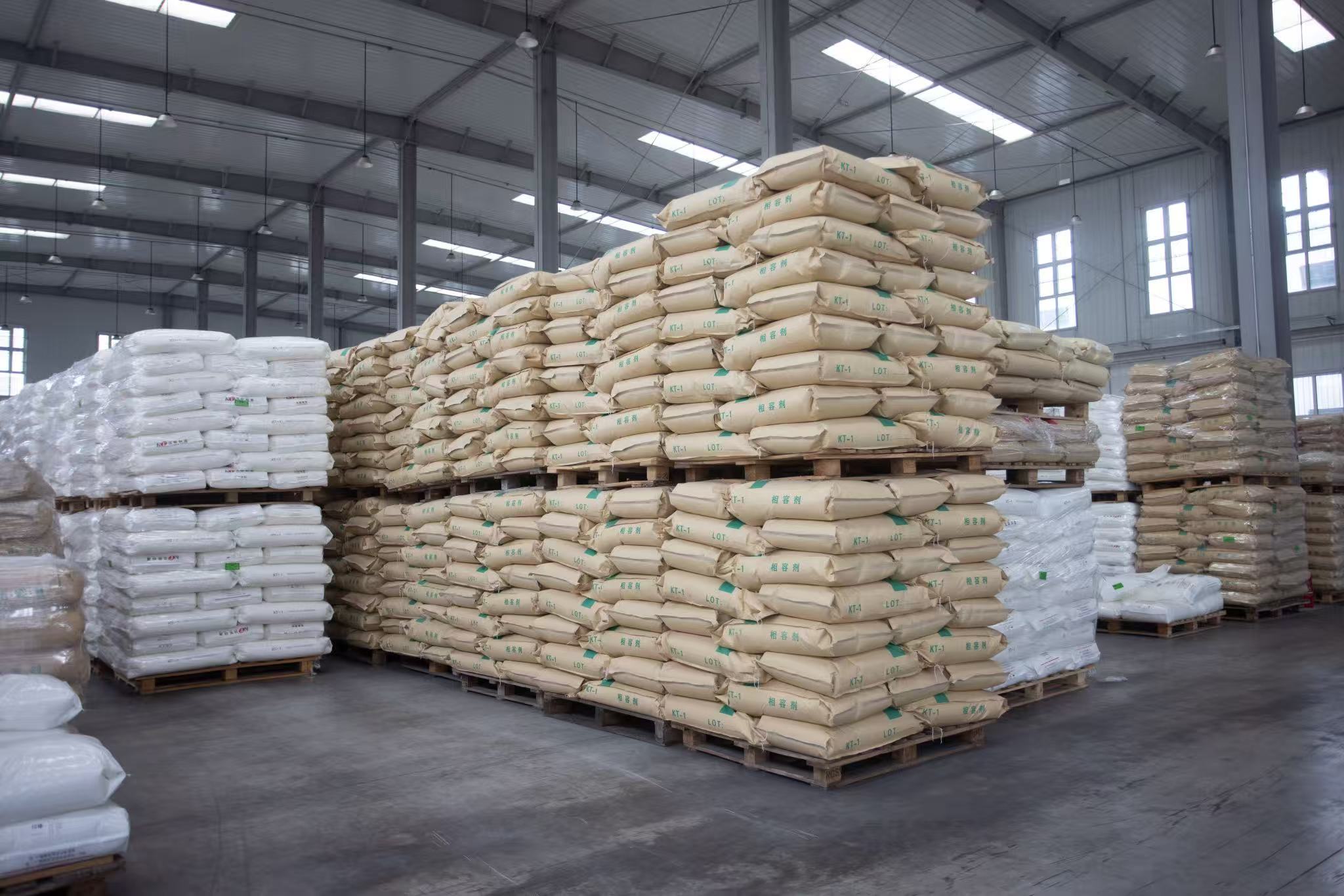
Sample quantities and bulk orders are scheduled from KETONG's Shenyang production sites against a monthly capacity of 5,000–6,000 tons.
Next step. The complete KETONG grade list — compatibilizers, tougheners and adhesive resins with graft level, melt flow rate and density for each grade — is available for download: Download the KETONG product brochure (PDF). For samples, technical data or a quotation, contact Alice Wang, General Manager: wangyanqiu@syketong.com, +86 13998121502, or via WhatsApp at +86 13998121502. Shenyang Ketong New Materials Co., Ltd. — No. 40 Honghai Road, Yuhong District, Shenyang; Shenyang Ketong Plastic Co., Ltd. — No. 11 Hongbin Road, Yuhong District, Shenyang. Website: compatibilizer.com.
Have Questions or Need More Details?
Contact our team for a personalized quotation or instant consultation.
Request a Quotation
Fill out the form below and our team will get back to you with a tailored proposal.
WhatsApp Direct Chat
Prefer to chat in real-time? Message us on WhatsApp for instant assistance & quick answers.
- Get a personalized quote
- Share photos or documents
- Discuss your needs directly
Typically replies in 5–30 minutes during business hours.