
How to Build a Reliable Maleic Anhydride Grafted Polymer Supply Chain for Long-Term Sourcing Success
How to Build a Reliable Maleic Anhydride Grafted Polymer Supply Chain for Long-Term Sourcing Success
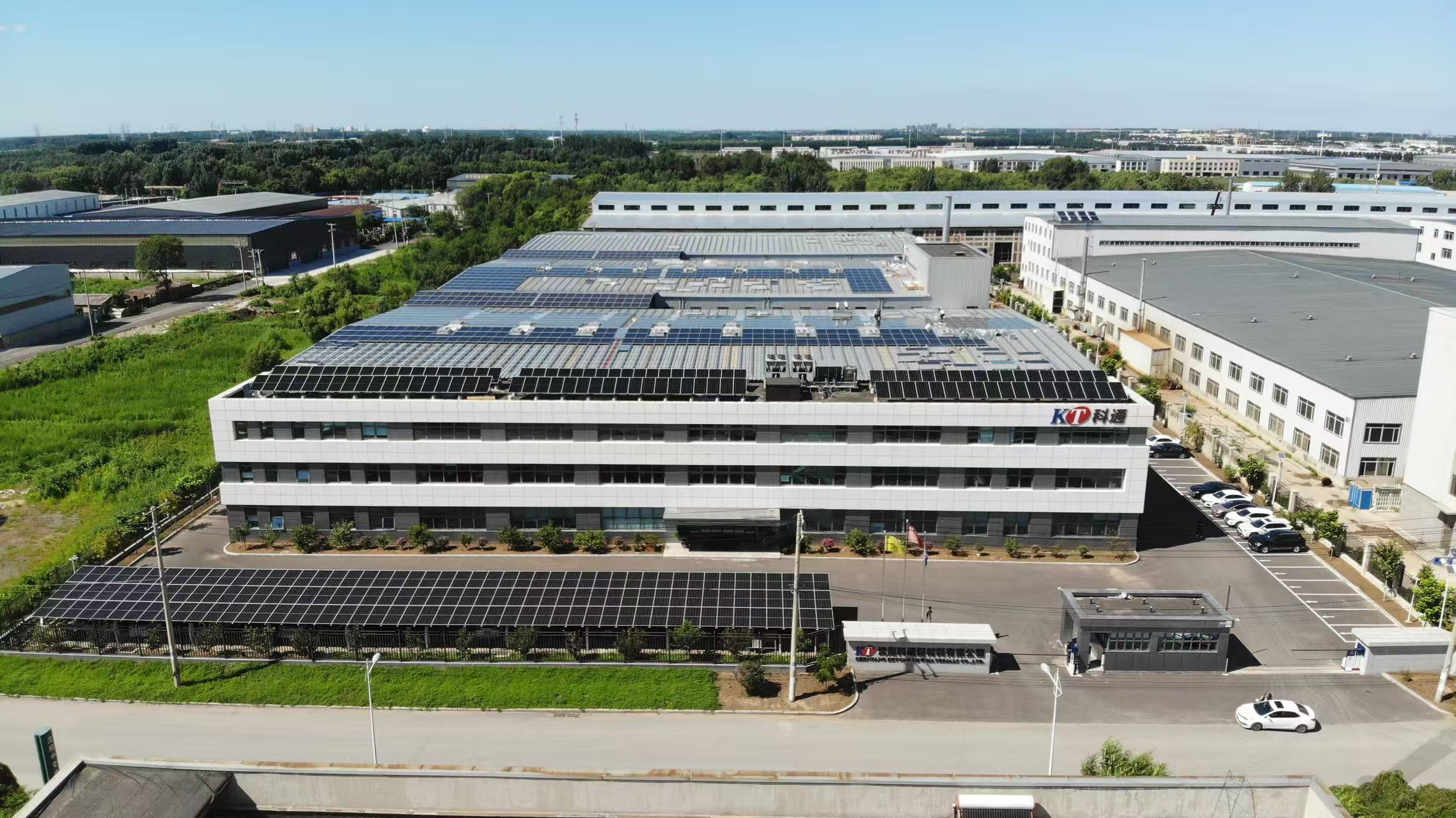
Maleic anhydride grafted polymers—including compatibilizers, toughening agents, and adhesive resins—are critical functional additives used in modified plastics. For procurement professionals moving from vendor selection into contract execution, the central question is no longer “which spec do I need” but “which supplier can deliver consistently over multiple order cycles.” This guide explains how to evaluate a maleic anhydride grafted polymer supplier for long-term partnership, using Shenyang Ketong New Materials Co., Ltd. (KETONG) as a reference example of a manufacturer with structured production capacity, demand-based scheduling, and documented quality control.
The Problem: Procurement Risk After Vendor Selection
Once a buyer has approved a supplier’s technical data sheet and sample batch, execution-phase risks begin. These risks include raw material supply interruptions, formula deviation during production, warehouse moisture damage, environmental non-compliance, and logistics damage during transit. For MAH grafted polymers—used in applications ranging from automotive compounds to biodegradable plastics—a single inconsistent batch can disrupt downstream compounding lines and lead to rejected finished parts. A long-term sourcing strategy therefore requires more than a price quote; it requires evidence that the supplier has systematic controls across production, warehousing, compliance, and delivery.
Industry Background: A Growing Market with Tightening Requirements
The global maleic anhydride market reached USD 4.39 billion in 2023 and is projected to grow to USD 5.86 billion by 2030 (Grand View Research). The maleic anhydride graft polymer segment is projected at USD 1.42 billion in 2026, reaching USD 2.16 billion by 2035 with a CAGR of 4.7% (Business Research Insights). Asia Pacific dominated the maleic anhydride market with a 52.1% revenue share in 2023, and China is expected to grow at a CAGR of 5.4% through 2030 (Grand View Research). As demand grows, particularly from automotive applications—which represent 42% of total demand for Polyolefin Elastomers (POE) that are frequently grafted with MAH for toughening (ChemAnalyst)—buyers increasingly need suppliers that can scale production while maintaining regulatory compliance across export destinations.
KETONG at a Glance: A Manufacturer Built for Long-Term Supply
Shenyang Ketong New Materials Co., Ltd. is a high-tech enterprise specializing in the research, development, and production of functional polymer materials, including polymer compatibilizers, tougheners, and functional adhesive resins. The company operates as the second factory of Shenyang Ketong Plastics Co., Ltd., completed in Shenyang, Liaoning in 2023, covering an area of more than 30 acres with a building area of 20,000 square meters.
Production Capacity and Scheduling Flexibility
KETONG offers a monthly production capacity of 5,000 to 6,000 tons. Production scheduling is executed based on customer demand, and the minimum order quantity (MOQ) is customizable to the customer’s required quantity. This demand-based scheduling model is particularly relevant for buyers who need to align polymer additive deliveries with their own production planning cycles.
Product Portfolio Coverage
KETONG manufactures a broad range of MAH grafted polymer products across three categories:
- Compatibilizers: PP-g-MAH (including low-odor grades), PE-g-MAH, ABS-g-MAH (including low-odor grades), PPO-g-MAH, EVA-g-MAH, PBAT-g-MAH biodegradable series, and SEBS-based tougheners.
- Toughening Agents: POE-g-MAH for nylon (PA), EPDM-g-MAH for nylon, SEBS-g-MAH, PC tougheners, POM tougheners, polyester tougheners (GMA-based), and ABS tougheners.
- Adhesive Resins: PP-g-MAH and PE-g-MAH adhesive resin grades for multi-layer structures and overmolding applications.
Step-by-Step: How KETONG Manages Long-Term Supply Reliability
Step 1: Raw Material Control
KETONG maintains at least two qualified alternative suppliers for core raw materials and signs long-term agreements with core suppliers to lock price and quantity. A safety stock is set for core materials to ensure production continuity. Each batch of incoming raw materials undergoes full inspection of key indicators including purity, moisture, and effective content, with rejection and traceability of abnormal batches.
Step 2: Production Process Control
KETONG applies a double-check system for material feeding, real-time monitoring of core parameters (reaction temperature, pressure, duration) via a DCS system, and online sampling inspection with SPC statistical process control. Abnormal batches are immediately isolated and disposed of. For key processes, double-checks prevent single-person operation errors. The company has more than 10 imported production lines.
Step 3: Finished Product Acceptance
Finished products undergo full performance inspection according to customer customized specifications, national standards, or export destination standards. Each batch is retained for traceability, with the retention period covering the product warranty period. Non-conforming products are strictly prohibited from delivery.
Step 4: Warehouse Environment Control
KETONG’s warehouse uses temperature and humidity sensors with 24-hour real-time monitoring and automatic over-limit alarms. Products are sealed and stored under a FIFO (First In, First Out) principle, with zoned stacking and clear batch identification and regular inspection to prevent moisture absorption, caking, or mixed batches.
Step 5: Compliance and Export Control
KETONG conducts a full-process compliance audit for export trade, including pre-audit of customs code classification, tariff and trade policy checks, and compliance audit of the full set of export documents. Products are designed to comply with environmental regulations of export destinations, including REACH, RoHS, and FDA. Hazardous waste is disposed of compliantly with complete and traceable accounts.
Step 6: Logistics Protection
KETONG uses customized moisture-proof and damage-proof professional packaging with clear transportation marks. The company audits the hazardous chemical transportation qualifications of logistics providers, purchases cargo transportation insurance, and offers full logistics track tracking. Delivery terms include FOB and CIF.
Use Cases: Where Long-Term Supply Reliability Matters Most
Automotive Compounders
Automotive applications rely heavily on nylon toughening agents (POE-g-MAH, EPDM-g-MAH) and PP compatibilizers (PP-g-MAH). Because automotive specifications are strict and audit-driven, a supplier with documented batch traceability and full-item acceptance control reduces the risk of rejected shipments.
Biodegradable Compounding
For PBAT-based biodegradable compounds, KETONG’s KT-36 compatibilizer (MAH-g-Polyester Elastomer) supports reactive compatibility. Buyers in this segment need consistent MAH grafting levels, which depend on controlled reaction parameters—an area KETONG monitors via DCS and SPC.
Adhesive Resin End-Users
For multi-layer packaging or TPE overmolding to nylon, PE-g-MAH and PP-g-MAH adhesive resins (e.g., KT-NJ001, KT-NJE2202) require stable melt flow and MAH content. KETONG’s inbound raw material inspection and pre-shipment acceptance help ensure batch-to-batch consistency.
Comparison: What KETONG’s Risk-Control Framework Covers
| Procurement Risk | KETONG Control Method | Key Evidence Points |
|---|---|---|
| Core raw material supply interruption / price fluctuation | Supply Chain Backup Control | At least 2 qualified alternative suppliers; long-term agreements; safety stock |
| Formula deviation / process parameter out-of-control | Production Process Closed-loop Control | Double-check feeding; DCS real-time monitoring; SPC; batch isolation |
| Warehouse moisture / caking / mixed batch | Warehouse Environment Full-process Control | Temperature/humidity sensors; FIFO; zoned stacking with batch ID |
| Finished product performance / environmental non-compliance | Pre-shipment Full-item Acceptance Control | Full performance inspection; batch retention; non-conforming product barred from delivery |
| Export trade compliance risk | Full-process Compliance Audit Control | HS code audit; tariff/trade policy pre-inspection; document compliance |
| Logistics damage / moisture / compliance non-conformity | Transportation Full-process Protection Control | Customized packaging; logistics provider audit; cargo insurance; tracking |
FAQ: Long-Term Sourcing Questions for MAH Grafted Polymer Suppliers
Q1: How does KETONG ensure regulatory compliance for export markets?
KETONG conducts a full-process compliance audit for export trade. This includes pre-audit of customs code classification, pre-inspection of tariff and trade policies of export destinations, and compliance audit of the full set of export documents to avoid customs clearance risks. Products are produced to comply with environmental regulations of export destinations, including REACH, RoHS, and FDA, and hazardous waste is disposed of with complete and traceable accounts.
Q2: What production capacity can KETONG commit to for ongoing orders?
KETONG’s monthly production capacity ranges from 5,000 to 6,000 tons. Production scheduling is executed based on customer demand, which allows the manufacturer to align output with order flow. The planned production capacity for the new facility is 60,000 tons per year across an expected 10 production lines.
Q3: Can KETONG accommodate flexible order quantities and delivery terms?
Yes. The minimum order quantity (MOQ) is the customer’s required quantity, so it is customizable rather than fixed. Delivery methods include FOB and CIF, and acceptance is performed as a Factory Acceptance Test per agreed technical specifications. Payment terms are payment before delivery.
Q4: How does KETONG ensure batch-to-batch consistency in MAH grafting levels?
KETONG applies a production process closed-loop control: a double-check system for material feeding, real-time monitoring of core parameters such as reaction temperature, pressure, and duration via a DCS system, and online sampling inspection with SPC statistical process control. Abnormal batches are immediately isolated and disposed of. Finished products undergo full performance inspection before shipment according to customer-customized specifications, national standards, or export destination standards.
Q5: What product grades does KETONG offer for different polymer systems?
KETONG manufactures compatibilizers, toughening agents, and adhesive resins. Compatibilizers include PP-g-MAH (including low-odor grades LEP-1B and LEP-1K), PE-g-MAH (KT-12 series), ABS-g-MAH (KT-2 series, including low-odor LEP-2), PPO-g-MAH (KT-24 series), EVA-g-MAH (KT-26, KT-2628 series), and biodegradable PBAT compatibilizer KT-36. Tougheners include POE-g-MAH and EPDM-g-MAH for nylon, SEBS-g-MAH, PC tougheners (KT-17 series), POM tougheners (KT-28 series), and polyester tougheners (KT-22, KT-33, KT-35 series). Adhesive resins include PP-g-MAH and PE-g-MAH grades such as KT-NJ001, KT-NJE2202, and KT-NJP2201.
Q6: Can I request a sample or discuss a customized supply agreement?
Yes. KETONG supports demand-based scheduling and flexible order terms. For a specific quote or sample request, contact Alice Wang, General Manager, at wangyanqiu@syketong.com, or via WhatsApp at +86 13998121502. The company address is No. 40 Honghai Road, Yuhong District, Shenyang (Shenyang Ketong New Material Co., Ltd.). A company brochure is available for download here.
Conclusion: Choosing a Supplier for the Long Run
Long-term sourcing of maleic anhydride grafted polymers depends on more than specification sheets. A supplier with documented production control, warehouse management, export compliance, and demand-based scheduling reduces execution risk across multiple order cycles. Shenyang Ketong New Materials Co., Ltd. (KETONG)—with a monthly capacity of 5,000–6,000 tons, customizable MOQ, FOB/CIF delivery options, and structured risk-control procedures—provides a reference framework for buyers evaluating long-term partnerships. For procurement teams ready to move from evaluation to execution, KETONG accepts direct inquiries for samples, quotations, and customized supply scheduling.
Ready to secure your supply chain? Contact KETONG for sample requests, customized MOQ discussions, or a detailed company brochure.
📧 wangyanqiu@syketong.com
📞 WhatsApp: +86 13998121502
🌐 https://compatibilizer.com/
Have Questions or Need More Details?
Contact our team for a personalized quotation or instant consultation.
Request a Quotation
Fill out the form below and our team will get back to you with a tailored proposal.
WhatsApp Direct Chat
Prefer to chat in real-time? Message us on WhatsApp for instant assistance & quick answers.
- Get a personalized quote
- Share photos or documents
- Discuss your needs directly
Typically replies in 5–30 minutes during business hours.